
The Woman's Guide to Estate Planning

By Jon G. Sanchez, CEO - Specialized Trusts & Estate Plans
Estate planning is not a men's topic or a women's topic. It is a family topic.
Still, a lot of women sit in the middle of the practical realities that make a plan work or fall apart: caregiving, name changes after marriage or divorce, longer life expectancy on average, blended families, and being the person everyone assumes will "handle it" when something happens.
This guide is for those realities. Practical. Direct. No stereotypes. No talking down.
If you are the organizer in your family, the caregiver, the decision-maker on paper, or the person who has put this off because life is already full, this is for you.
Start With What You Want Your Plan to Do

Before forms and titles, get clear on outcomes:
- Who should make financial decisions if you cannot?
- Who should make healthcare decisions if you cannot?
- Who should inherit, and how (outright, in trust, over time)?
- Who should raise minor children if that applies?
- What should happen to a home, a business, or accounts that support someone else?
Write the answers in plain language. The documents exist to carry those answers, not the other way around.
Caregiving Changes the Stakes
Many women are caring for aging parents, a spouse, kids, or all of the above at once.
That has estate planning consequences on both sides:
- Your parents' plans: Do you know where their documents are? Are you named as agent or successor trustee? Do you understand what that means before a crisis?
- Your own plan: If you became ill, who steps in for your dependents and your household? Caregiving often makes people experts on everyone else's needs and late to their own paperwork.
You cannot pour from an empty binder. Your plan protects the people you are already working so hard to support.
Name Changes and Paper Trails
Marriage, divorce, and remarriage often mean a trail of names across deeds, accounts, Social Security records, insurance, and old beneficiary forms.
Your trust and powers of attorney should match how institutions know you. Beneficiary designations should match who you intend now, not who you intended under a prior name or prior relationship.
After any name or relationship change, run a short audit:
- Trust and will names and signatures
- Financial and healthcare agents
- Deeds and major account titles
- Retirement and life insurance beneficiaries
- Digital account recovery info
Mismatches here cause delays at the exact moment your family needs speed.
Longevity Means Your Plan Has to Last
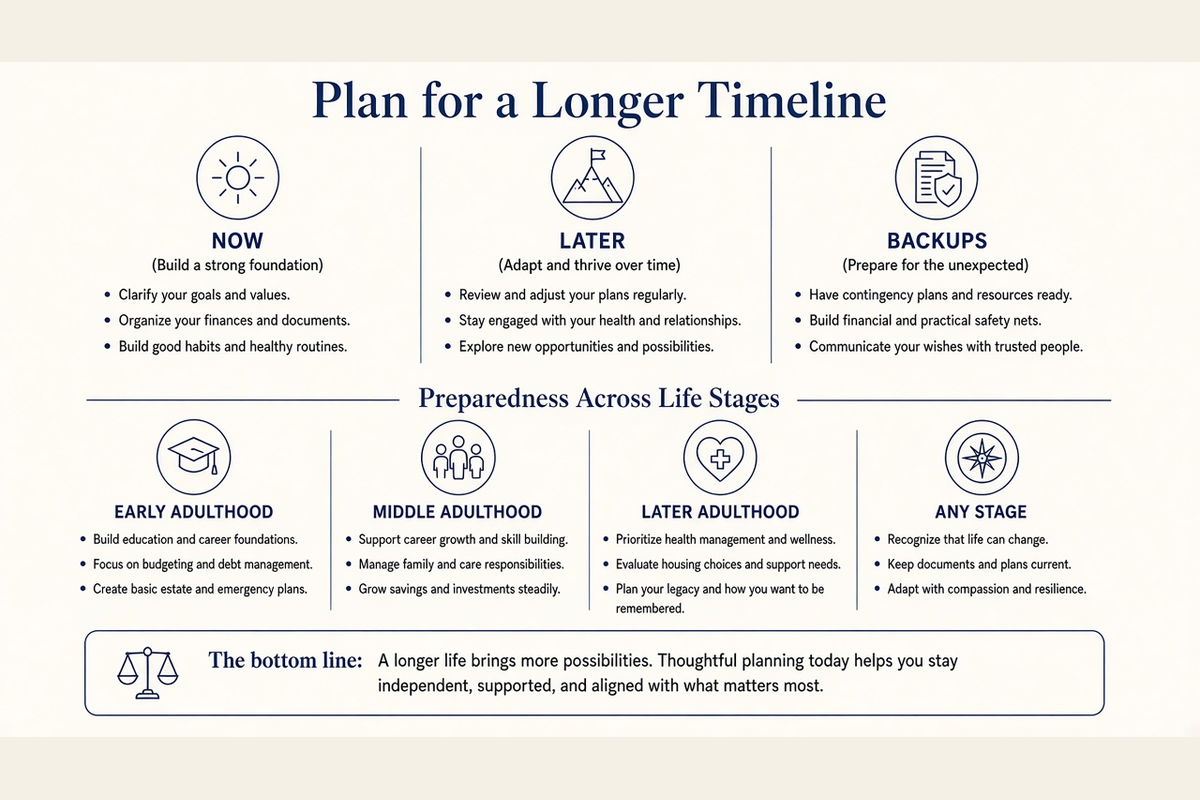
On average, women live longer than men. That is a statistic you have probably heard. What it means for planning is more useful than the headline:
- You may manage finances alone later in life
- You may need stronger incapacity planning (powers of attorney, healthcare directives, successor trustees who can actually serve)
- You may inherit and then need to retitle or update a plan that was built around a couple
- Long-term care and housing decisions become part of the conversation earlier than people expect
A plan that only "leaves everything to my spouse" is incomplete if you might outlive that spouse by years. Build the next layer: backups, clear instructions, and funded documents that still work when you are the one left making decisions.
Blended Families Need Clear Instructions
Second marriages, stepchildren, and kids from prior relationships are common. Love can be real and still collide with vague paperwork.
If you want your spouse protected and your children provided for, say so in the plan structure. Do not assume "they will do the right thing." Assumptions are how families end up in conflict.
Tools like trusts, clear beneficiary designations, and honest conversations while everyone is alive beat courtroom interpretations later.
This is not about distrust. It is about clarity. When that situation fits, a Blended Family Estate Plan is simply a way of building those instructions on purpose instead of hoping the old forms sort it out.
If You Are Often Named as Decision-Maker
Women are frequently named as executor, successor trustee, financial agent, or healthcare agent for parents and partners.
If that is you:
- Ask where the originals live
- Ask whether the trust was funded
- Ask who the backups are
- Ask whether beneficiary forms match the trust
- Ask whether anyone has walked through a review in the last several years
Being named is an honor. Being prepared is a kindness to yourself.
And while you are organizing someone else's life, put your own plan in order too. The people who handle everything for others deserve a plan that does not leave their kids guessing.
The Core Documents (Same for Everyone)
You still want the fundamentals working together:
- Revocable living trust - main instructions, and when funded, a path to avoid probate for those assets
- Pour-over will - backup for anything left outside the trust
- Financial power of attorney - money decisions if you cannot act
- Healthcare directive - medical decisions and preferences
Add guardianship nominations if you have minor children. Coordinate beneficiary designations so retirement accounts and insurance do not quietly override the trust.
Here is the part survivors feel: traditional attorney work often stops at drafting. Funding and implementation get handed back to the client. That is how a binder can look finished while the house and accounts never got retitled.
S.T.E.P.TM was built to close that gap. A specialist-led process helps you create and notarize in one guided session from home. A Trust Funding Specialist follows the funding. Trust & VerifyTM checks titling, beneficiaries, and funding so the plan is not left as a stack of homework.
Money Conversations Without the Awkward Spiral

You do not need a dramatic family meeting. You need a few grounded steps:
- Know what you own and where it sits
- Know who is named on each major account
- Tell your agents where the binder and digital access live
- Update after life changes instead of waiting for a perfect quiet month
If a partner historically handled the investments, get oriented now. Not because you need to become a market expert overnight. Because incapacity and death do not schedule training sessions.
What S.T.E.P.TM Can Help With
At Specialized Trusts & Estate Plans, we help women (and the families who rely on them) build and update plans that match real life: caregiving roles, blended families, name changes, and the need for clear decision-makers.
Whether you need a plan built for your stage of life or a review of the one you already have, we can help. See specializedtrusts.com/services.
The goal stays the same either way. Your plan should work for the people you love, including you.
Bottom Line
You already carry a lot. Estate planning is one place where a little structure now prevents a lot of weight later.
Name your people. Align your paperwork. Fund the trust. Revisit when life changes.
That is not complicated for complexity's sake. That is how you stay in charge of the story your family inherits.
Ready to Take the Next Step?
If your plan has not kept up with your roles, your family, or your accounts, let's get a clear picture.
We build estate plans for every stage of life, and we review existing trusts when life has changed. See the options at specializedtrusts.com/services, or talk with a Certified Estate Planning Advisor about the right next step.
FAQ
Do I need my own estate plan if I am married?
Yes. Marriage does not replace a trust, will, powers of attorney, or healthcare directive. Joint life still needs individual decision-makers named and assets coordinated.
What if I changed my name after marriage or divorce?
Update your estate documents and check deeds, accounts, and beneficiary forms so institutions can match your identity and your intent without delay.
I am my parents' caregiver. Where do I start?
Confirm you are named (if that is their wish), locate originals, understand whether a trust was funded, and encourage a review if the plan is old. In parallel, keep your own plan current so your household is covered too.
How do blended families avoid conflict in an estate plan?
Use clear written instructions, coordinated beneficiary designations, and trust structures that state who is protected and how. Have the conversation while everyone can still participate.
What should I bring to a S.T.E.P.TM planning conversation?
Your current trust and supporting documents if you have them, a rough list of major assets, notes on name or family changes, and any beneficiary designation info you have. Uncertainty is fine. That is what the conversation is for, whether you need a life-stage package, a review, or a restatement.