
7 Signs Your Living Trust May No Longer Protect Your Family

Imagine someone who created a living trust ten years ago and placed the finished documents in a safe place. Since then, their marriage ended, a move took them across state lines, and a new grandchild joined the family.
The trust has not changed, but the trust document still contains the names, assets, and financial decisions that made sense a decade ago.
On paper, the plan looks complete. In practice, it no longer reflects the family it was created to protect.
A living trust should keep pace with changes to your family, finances, property, and wishes. As those parts of life evolve, a trust that once fit may no longer reflect your current situation.
The following seven signs can help you identify when your current trust may deserve a closer look.
1. Your Family Has Changed Since You Signed the Trust
A marriage, divorce, birth, or death can change who depends on you and how you want your assets handled.
A trust written before those events may still name a former spouse, exclude a new child or grandchild, or divide assets in a way that no longer reflects your intentions. Guardianship provisions and instructions for children may also have been written for circumstances that no longer exist.
Review the trustee, named beneficiaries, guardians, and other family members in the plan to confirm each person still reflects your wishes.
2. You Moved to a Different State
A living trust prepared in one state may not align with the requirements of another.
Moving does not automatically invalidate the plan, but certain states may apply different requirements to the trust document, supporting documents, real property, and execution process.
An interstate move is a common reason to review an existing trust and confirm that its language and supporting documents still fit the state where you now live.
A restatement can bring those documents into alignment with your current state rather than leaving your family to rely on provisions written for somewhere you no longer live.
3. Estate Taxes or Legal Requirements Changed
Your trust may have been created around tax or legal requirements that were in place years ago, and changes since then can leave its terms tied to thresholds or rules that no longer apply to your estate.
Not every legal change requires a new trust, but the provisions should still be reviewed to confirm they still hold up under today's tax and legal requirements.
4. Your Assets Look Different Today
If you purchased a home or other property, opened new retirement accounts, added life insurance, or inherited money, changes to your property, accounts, or investments can leave an older living trust out of sync with what you own today.
Your financial situation may also have become simpler since the original plan was signed. These changes can affect how property should be managed and transferred.
The larger the difference between what you owned then and what you own now, the more important it becomes to check the trust’s structure and Schedule of Property.
5. A Successor Trustee or Beneficiary Is No Longer the Right Choice

Years can change the people named in a trust just as much as the assets inside it change.
A successor trustee may have died, moved away, or lost touch with your family. A beneficiary relationship may also have changed through divorce, estrangement, remarriage, or death.
An outdated name can leave important decisions with someone you would no longer choose, or leave your family without a practical person ready to manage property, accounts, and other financial affairs.
A trust review can confirm whether the people named in your plan still reflect your choices today.
6. You Started or Acquired a Business
A living trust created before the business existed may not address the ownership interest, who should control it, how the entity operates if you become unable to act, or how the company fits with the rest of your family’s assets.
S.T.E.P.™ sees this frequently with business owners: the company becomes a major part of the family’s wealth, but the personal estate plan is never updated to account for it.
When a company becomes a meaningful part of your wealth, its ownership, succession, and connection to your family should be addressed within your broader estate plan.
7. Your Living Trust and Beneficiary Designations No Longer Match
A trust can direct assets one way while the beneficiary forms on individual accounts point somewhere else.
This can happen when an old designation was never updated or when a new account was opened after the trust was signed. In either case, the account may not follow the instructions written into the trust.
Reviewing complete details, including account titles and beneficiary forms, alongside the trust helps confirm that assets held in retirement accounts, life insurance policies, and other accounts are set up to transfer according to the same instructions.
Why Restating Your Living Trust May Better Reflect Your Current Situation
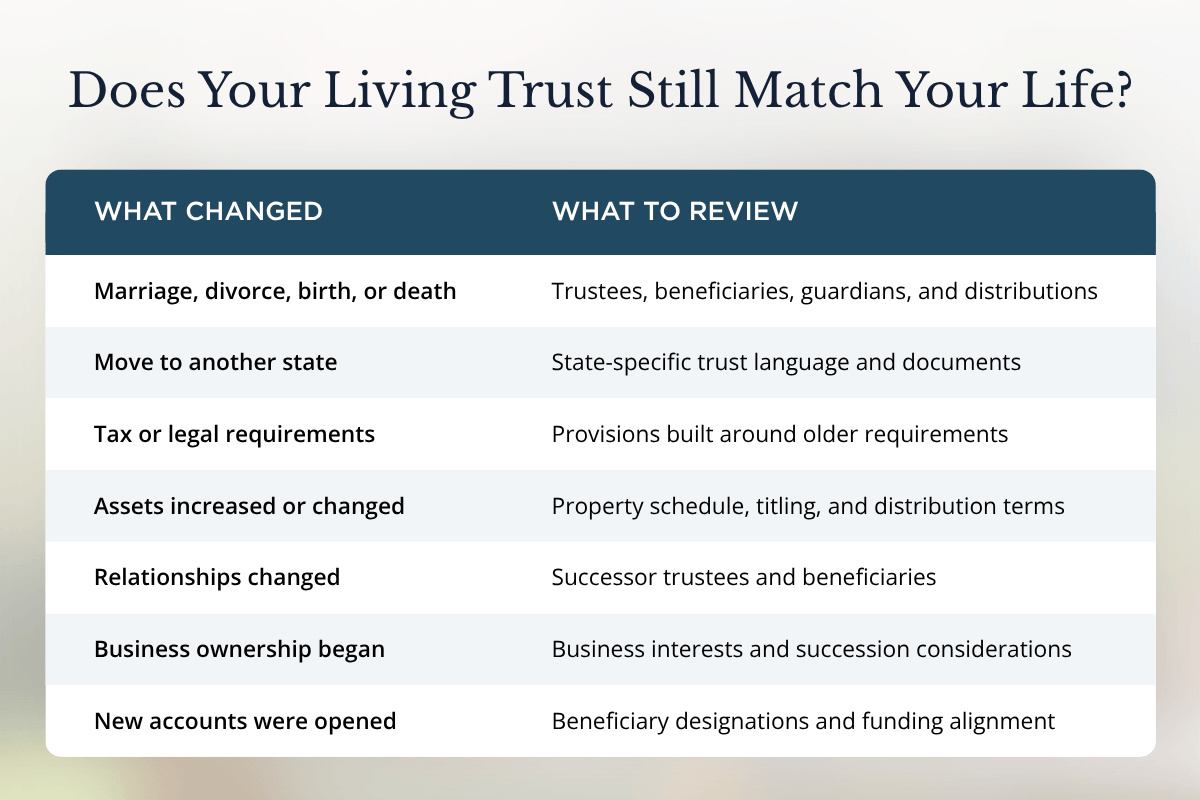
Fig. 1.0 Estate Planning Checklist: Does Your Living Trust Still Match Your Life?
Seeing one of these signs is reason enough to look more closely at how well the trust still reflects your life.
Some issues may only require targeted corrections, while broader changes involving family members or supporting documents may call for a full trust restatement, without the added expense of hiring an estate planning attorney to recreate the plan from scratch.
The S.T.E.P.™ Trust Restatement Plan rebuilds the existing trust from the inside, updating the provisions, legal language, documents, and asset structure so the grantor maintains control over how current assets and wishes are reflected.
The biggest advantage is that it creates one coordinated plan instead of an older trust surrounded by outdated instructions and unresolved funding questions.
What to Expect From the S.T.E.P.™ Estate Planning Process for Trust Restatement
Once the scope of the restatement is clear, the S.T.E.P.™ team moves the plan through a structured, specialist-led process.
Your Current Situation Is Reviewed
A S.T.E.P.™ Trust Restatement begins with a Certified Estate Planning Consultant, who introduces the restatement process, followed by a Client Intake Specialist, who conducts a one-hour discovery call.
The team learns about your family, assets, existing trust, and the changes that led you to revisit it.
This step establishes whether the Trust Restatement Plan is the appropriate path and prepares the information needed for the restatement meeting.
Core Documents Are Restated
During a guided session, a S.T.E.P.™ Trust Creation Specialist rebuilds the plan and reviews the documents with you.
The Trust Restatement Plan includes:
- Restated State-specific Individual or Joint Revocable Living Trust
- Restated Pour-Over Will
- Restated Durable Power of Attorney
- Restated Advance Healthcare Directive
- Restated Certificate of Trust
- Restated Tangible Personal Property General Assignment
- Restated Schedule of Property
The plan also includes a HIPAA authorization, beneficiary list, updated emergency contacts, and other applicable documents that address who can act if you become unable to make decisions.
Remote online notarization and witnesses are coordinated as part of the process. The completed trust is then uploaded to a secure digital vault.
Assets Are Checked Against the Restated Plan
A Trust Funding Specialist compares the trust assets listed in the plan with the home, bank accounts, brokerage accounts, business interests, and other property you currently own.
The specialist helps ensure that the assets transferred into the trust are properly titled and follows up on any accounts you still need to fund.
Beneficiary designations and account alignment are also confirmed through S.T.E.P.™’s Trust & Verify™ standard so the relevant assets are positioned to avoid probate rather than create preventable issues in probate court.
The Plan Continues to Be Reviewed
Once the restatement and funding work are complete, a Client Relationship Specialist remains the ongoing point of contact.
S.T.E.P.™ clients receive long-term support, education, family meetings, and annual reviews. This creates a practical way to revisit the plan as life changes instead of putting it away for another decade.
Taken together, the S.T.E.P.™ process brings the trust’s terms, named decision-makers, beneficiary designations, and assets into one coordinated estate planning structure.
For a revocable living trust, that alignment helps transfer assets according to the current plan and reduces the chance that remaining assets are pulled into the probate process.
Can an Irrevocable Trust Be Restated?
An irrevocable trust may sometimes be modified, terminated, or transferred into another trust, but it is not updated through the same restatement process as a revocable living trust. The available options depend on the trust’s terms.
Don't Leave Your Family's Protection to an Outdated Trust
An outdated living trust can sit quietly for years because nothing tests it until your family needs to rely on it.
By then, your loved ones named in the trust, the assets included, and the instructions written into the plan may no longer reflect the life you built.
Your spouse, children, or successor trustee should not be the first to discover that something no longer fits your trust document.
The S.T.E.P.™ Trust Restatement Plan brings your trust documents, assets, and current wishes back under one coordinated plan.
Start your plan today and take the first step toward a living trust that reflects your life now.